.png)
A solar pump in northern Kenya is keeping the peace. The woman running it can't inherit the land it sits on.

Nobody designed a water kiosk to end conflict, but in the north of Kenya, that's exactly what happened, and the women running them are the reason why.

Getrude Misango spent years moving women from the margins of Kenya's economy into its centre, now the funding that makes it possible is disappearing.
Misango is sitting in a conference room in at the Women Deliver Conference in Naarm (Melbourne) when she explains it.
"Women are not just beneficiaries of the project. They are active players in the water governance systems."
She's talking about solar-powered water kiosks in northern Kenya, where women manage the revenue, run the operations, and have become central to peace-building in communities where drought and conflict have long arrived together.
So how did peace become a byproduct of a woman-run water kiosk?
Water is a contested resource in these areas.
When women were put in charge of governing it, they gained formal authority over something the whole community depends on to survive.
That authority, combined with the role women already hold as the connectors and caregivers holding communities together, created the conditions for peace.
Nobody planned for that outcome.
It followed from women moving out of the role of beneficiary and into the centre of how the system is governed.
Misango has been watching this kind of change happen, and progress, in her view, shows up in specific places like when a woman opens a bank account without her husband's signature, a young mother goes back to a classroom after a savings group gave her the means to return, and when a solar pump moves clean water to 200,000 people in northern Kenya.
CARE International's 2030 goal is for 50 million women to have more equitable access to and control over economic resources.
Misango leads that work on the ground in Kenya, but the funding that makes it possible is shrinking.

What progress actually looks like
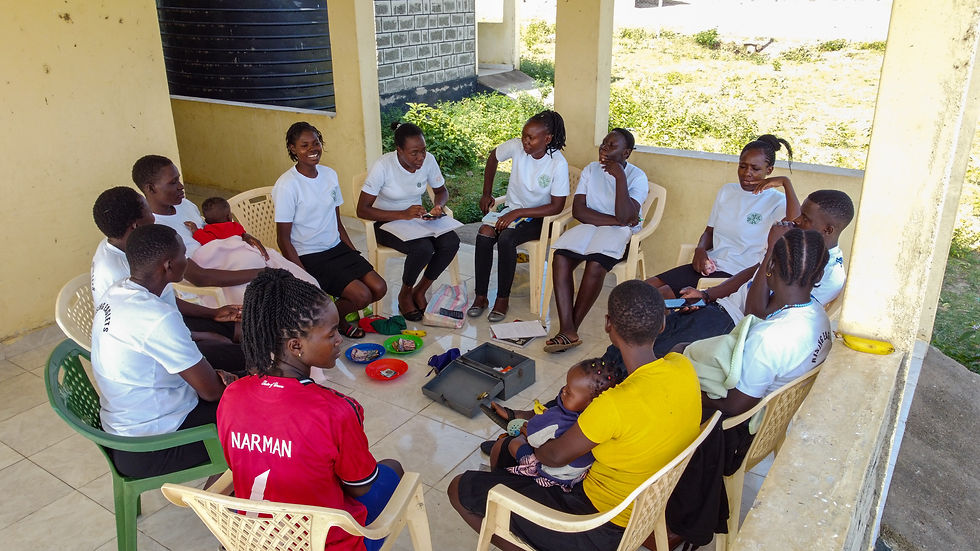
The progress she describes is measurable through programs like SHE SOARS, where young women are forming village youth savings and loan associations, entering technical careers that were once closed to them, and participating in decisions that shape their households and their communities.
In places like Kajiado, a town about 80 km south of Nairobi, women are gaining ground on financial inclusion, career choice, and decision-making power, each one harder to win than it looks on paper.
The program also works specifically with young mothers, some of them women who stepped away from school and are now building their way back.
Through weekly savings groups and community training sessions, they're developing financial literacy alongside something harder to quantify.
Some return to school, some come back later as mentors. The ones who return are teaching the next group what they learned, and the cycle that program breaks is replaced by one worth continuing.
Climate isn't neutral
"The impact of climate change is disproportionately difficult on women and girls," Misango says.
"The impact is grave."
When wells dry out in rural Kenya, women and girls organise to find water, and when floods come, it's women who hold their communities together, managing the immediate crisis while continuing to carry the longer-term weight of keeping families fed and children safe.
The climate doesn't distribute its damage evenly, and the women most exposed to it are also the ones doing the most to hold their communities together.
Without sustained investment in the programs that support them, that load falls on women alone.
The wall with no address
The issue Misango names without resolution is land.
Women in Kenya are still largely unable to inherit property.
When parents die, land passes to sons, because daughters are expected to marry and move into another family's home, and when husbands die, the land's contested.
The pattern holds not because any law requires it, but because the cultural expectation's so deeply embedded that it doesn't need a law.
Without land, women can't offer collateral, and without collateral they can't access capital, and without capital the cycle holds.
Every program that builds a woman's economic power runs up against this wall eventually, and the wall has no address.
"It's not explicitly written out anywhere," Misango says.
"But it is very strong. When you try to challenge it, you feel how strong it is."
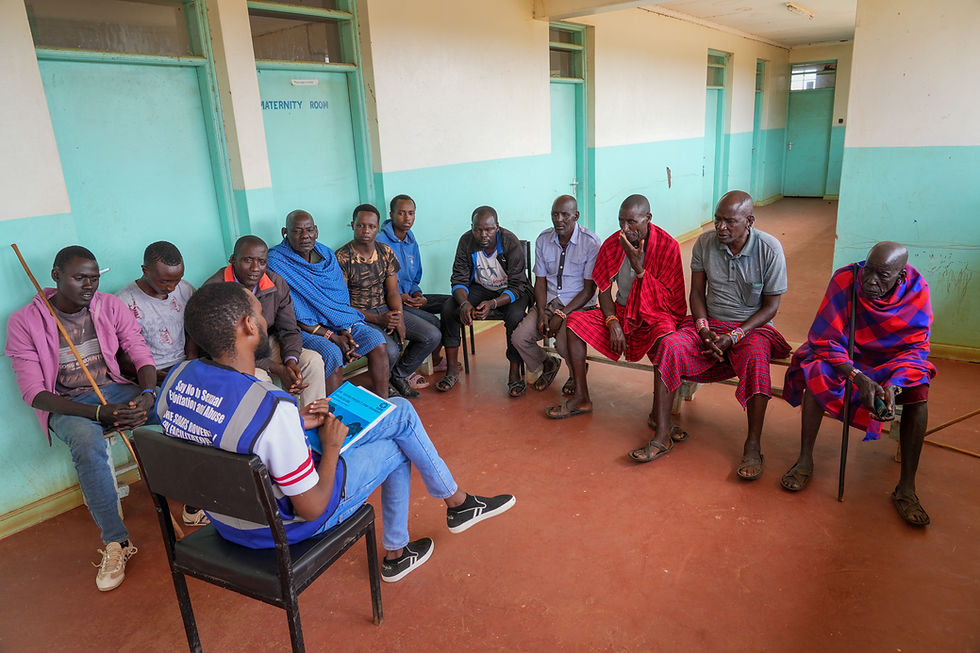
Legal reform can't reach an unwritten rule so the work of changing it is slower and more direct, and it means sitting down with communities, alongside men, and having the conversation deliberately.
That work takes time, and it takes funding, and right now both are in short supply.
The missing half of the conversation
Men.
That's where Misango keeps returning.
"For a very long time, we have excluded men from these conversations. We need to bring them on board. Our programs include boys in order to include them as part of the process, making them part of the conversation. Only then can you start to see things actually change."
She uses the word deliberate more than once. Progress, in her experience, doesn't happen by default.
What happens next
Near the end of the conversation, she says something that belongs to a much bigger room than the sectioned off press area of the conference hall.
"The future belongs to those who think differently, creatively, and innovatively. If you don't think creatively and differently, in a very innovative way, you will not make it in this new future."
The sentence is bigger than its context, at the time we were talking about how AI will shape the next generation of women-led projects.
But it applies to every woman in a savings group, every young mother calculating whether she can go back to school, every community where a solar pump's moving clean water.
Misango says the work's far from finished, and the land question alone could take another generation....yet the peace-building water kiosks are running, the savings groups are meeting, and the women are in the room.
What happens next depends on whether funding can keep them there.
Getrude Misango is Country Director of CARE Kenya. To support CARE Kenya's work, visit care-kenya.org.


Comments